
Start With Your Activities and Preferences
A women’s capsule wardrobe starts with the life you lead, not a universal list of approved garments. Record where you spend time, how often you need different kinds of clothing, and what feels comfortable through a full day. Fit preferences and local weather affect whether a piece earns regular use. This independent, informational approach does not require a shop, preset collection, or wardrobe service.
Daily settings and recurring activities
Map a typical month rather than an idealized week: note where you go, how often each setting occurs, and what clothing needs to do there. A recurring setting may call for ease of movement, a polished appearance, weather protection, or a combination.
Use frequency and function to identify useful categories, not to prescribe a fixed number of garments. For example, someone who works from home most days may need fewer formal outfits than a person attending in-person meetings several times each week.
- Work: Record office, remote, or client-facing days separately; note whether the setting calls for business-formal pieces, smart casual clothing, or comfort during long periods at a desk.
- Home: Consider how many hours are spent at home and whether clothing needs to support sitting, household tasks, or video calls without requiring a change.
- Travel: Estimate overnight trips and commuting frequency; identify needs such as comfortable movement, easy-care fabrics, and clothing that works across a changing itinerary.
- Social plans: Track regular dinners, gatherings, or cultural events, then distinguish casual meetups from occasions where a more polished level of dress feels appropriate.
- Outdoor time: Note walks, gardening, or other activities and their duration; these may require clothes that allow movement and suit the conditions outside.
- Recurring commitments: Include classes, volunteering, or appointments that happen weekly or monthly, since repeated use can justify a dedicated clothing function.
Review the map after four weeks to see which settings actually recur. Those patterns provide a practical basis for choosing clothing categories that serve your routine.
Comfort, fit, and climate
Comfort is observable over a full day: check whether a waistband stays comfortable while seated, sleeves allow you to reach overhead, and seams or fabrics feel pleasant against the skin. A garment that restricts a common movement may remain unworn even when its appearance is appealing. Try familiar motions in a fitting room, such as sitting, walking, and raising your arms, then assess the fit in each position.
Fitted and relaxed cuts serve different preferences and purposes. A closer cut can feel streamlined beneath a jacket or reduce excess fabric during movement, while a relaxed cut may offer more room through the shoulders, waist, or hips. Neither is inherently more flattering or practical for everyone; compare the garment’s actual ease and intended use with your own comfort. A well-fitting wardrobe staple should not depend on tolerating pinching, pulling, or constant adjustment.
Local weather changes fabric and layering needs. In hot, humid conditions, lightweight cotton or linen can feel less insulating than a dense knit; in cool weather, a midweight sweater or shirt beneath an outer layer makes temperature changes easier to manage. A climate with frequent rain may call for a water-resistant outer layer, while a dry, mild climate may need fewer heavy pieces. Look at typical daytime and evening temperatures across the year, not just the current forecast, and consider how often you move between heated interiors and outdoor conditions. These details help determine which fabric weights, sleeve lengths, and seasonal layers are comfortable in practice.
Personal style and silhouette preferences
Personal style influences whether clothes feel like your own: consider the colors you reach for, the shapes you enjoy wearing, and the level of formality that feels natural. Some people prefer muted neutrals and clean lines; others choose vivid colors, prints, or softer details. A capsule wardrobe color palette can begin with colors already worn often, without requiring every piece to look alike.
Silhouette preferences are individual, not rules attached to a body type. You might prefer a defined waist, straight lines, a loose shape, or different proportions in different outfits. Compare details such as shoulder seams, garment length, trouser rise, and the amount of ease through the torso; small changes can alter how an outfit sits and moves. There is no single cut that suits every person, age, occupation, or gender expression.
Formality can be personal too: one wearer may feel at ease in tailored trousers, while another prefers a simple dress or polished separates. Choose shapes and finishes that match how you want to present yourself in recurring settings, then assess whether you genuinely enjoy wearing them. The most useful choices express your preferences while remaining comfortable for the occasions you attend.
Clothing Categories to Consider
A useful capsule wardrobe includes categories that serve distinct purposes rather than several pieces that do the same job. Everyday tops and bottoms handle frequent dressing, while layers respond to changing temperatures and occasion pieces cover less frequent plans. For capsule wardrobe essentials for women, compare each category by comfort, movement, care, and how easily it can shift between casual and work-appropriate settings. The right balance depends on which garments you wear often and which can earn their place through more than one use.
Everyday tops and bottoms
Everyday tops and bottoms do most of the repeat work in a compact closet, so compare fabric behavior and movement as well as appearance. A knit top flexes easily for casual wear; a structured shirt may suit a more polished setting but can feel restrictive if its cut limits reaching or sitting.
| Category | Everyday function | Comfort and movement | Care consideration | Setting fit |
|---|---|---|---|---|
| Knit T-shirts and tops | Simple base for repeated casual outfits and under layers. | Soft knits usually allow easy reaching and sitting; check that the shoulder seam does not pull. | Follow the care label; some knits need gentler washing to limit shape changes. | Casual by default; a clean, opaque finish may work in relaxed workplaces. |
| Woven shirts and blouses | Add a defined shape and a more polished alternative to a knit top. | Room through the upper back and sleeves helps when driving, typing, or reaching. | Wrinkle-prone fabric may need ironing or steaming before wear. | Useful for work-appropriate outfits when the neckline and fabric suit the setting. |
| Jeans and casual trousers | Provide durable, repeatable bottoms for everyday dressing. | A comfortable rise and enough room at the hips and knees support sitting and walking. | Check laundering guidance; dark denim may transfer dye during early washes. | Jeans lean casual; plain, tailored trousers can read more formal. |
| Skirts and dressier trousers | Offer an alternative silhouette when jeans or casual trousers do not fit the occasion. | Choose a length and cut that allow a full stride and comfortable sitting. | Structured or delicate fabrics may require more careful storage and laundering. | Often adaptable to work or social settings, depending on fabric and finish. |
For well-fitting wardrobe staples, test ordinary movements such as raising both arms, sitting, and taking a long step. If a garment needs frequent adjustment or special care you are unlikely to manage, it may see less use than a simpler alternative.
Layers and occasion pieces
Light layers help regulate comfort when indoor temperatures, wind, or evening conditions change. A cardigan, overshirt, or light jacket can go over a tee or shirt; choose an open-front or easy-fastening shape if you need to add or remove it quickly. Thin knits and unlined woven layers take less closet space, while a lined jacket provides more coverage but adds warmth and bulk. Check that the sleeves sit comfortably over the tops you wear most, without pulling at the shoulders.
Warm layers serve a different purpose: a heavier knit, fleece-like layer, or insulated outer layer holds more warmth but can be cumbersome indoors. Select the weight according to how often you face cold conditions and whether the garment can also work as an outer layer. If it is worn only briefly during a season, it may occupy substantial storage for limited use; fold knits to support their shape and hang structured jackets on a broad hanger.
Occasion pieces cover formal gatherings, celebrations, or social plans that call for a more refined finish. A dress, tailored separate, or polished top may be versatile if it can be worn in more than one setting, but delicate fabric, special-care labels, and a narrow fit can reduce repeat use. Consider likely wear across the year and the space available for hanging or protecting the garment. A comfortable piece that suits several occasions generally offers more practical value than one reserved for a single event.
Choose Pieces That Work Together
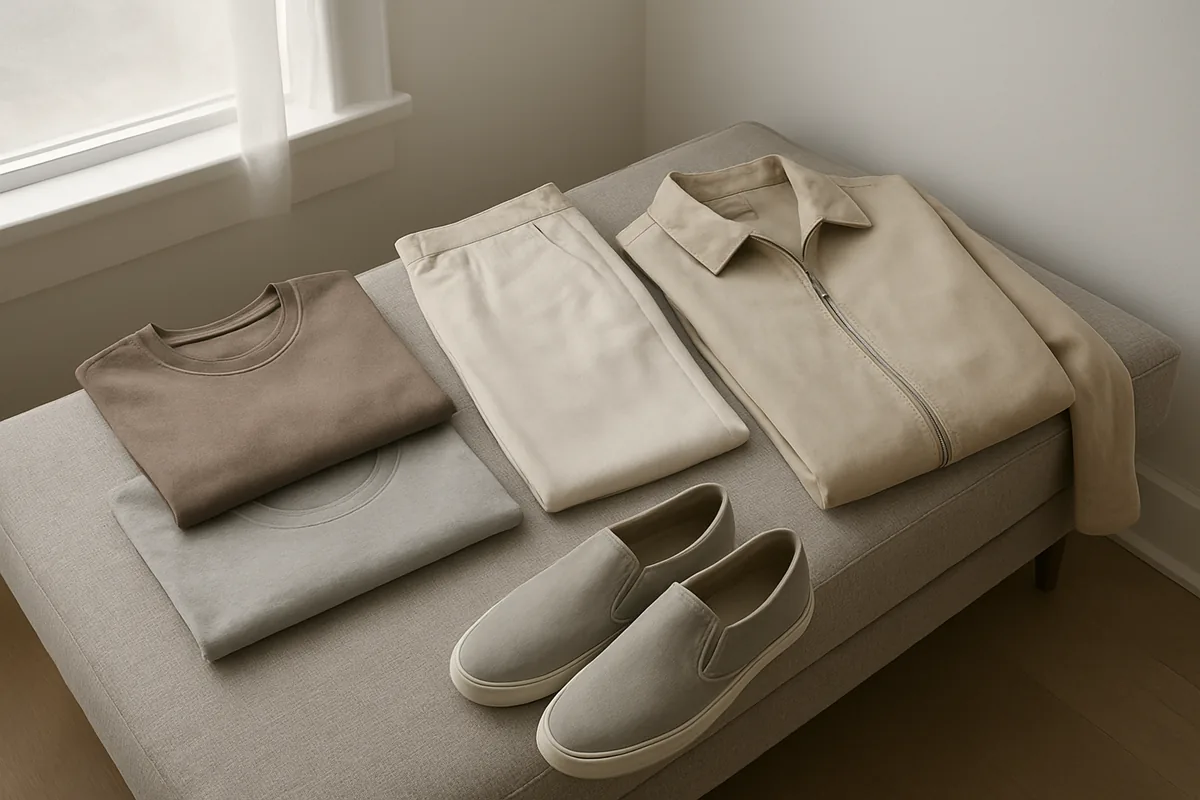
A cohesive wardrobe depends on how colors, fabric properties, and garment proportions interact, not simply on how many pieces it contains. Compatible colors make it easier to combine garments, while fabric feel and care requirements affect whether those combinations suit regular wear. Fit determines how comfortably one piece sits over another and whether the layers work indoors as well as outdoors. Use these relationships to shape outfit planning around preferences rather than a fixed formula.
Color and fabric compatibility
A small coordinating palette can make more combinations available from fewer garments: for example, navy, cream, and olive share muted, low-contrast qualities, so each color can sit beside the others without competing. A more varied palette, such as adding rust, pale blue, and bright pink, offers greater range but may require more deliberate matching. Neither approach suits everyone; choose according to the colors you enjoy wearing and the combinations you can readily picture. A capsule wardrobe color palette can include several accent shades if they recur across pieces rather than appearing only once.
Color is only one part of compatibility. A cotton poplin shirt feels crisp beside smooth wool trousers, while a soft jersey top may feel more natural with brushed cotton or denim. Check care labels before combining fabrics in a high-use outfit: a machine-washable piece may be inconvenient beside a garment that needs dry cleaning, and some cotton or linen fabrics can shrink or crease more readily than synthetic blends. If you prefer low-maintenance clothing, prioritize compatible washing instructions and similar care routines.
Seasonality also affects how fabrics work together. Linen and lightweight cotton can feel comfortable in warm weather, while wool, corduroy, and heavier knits provide more coverage in cooler conditions. Texture creates contrast even when colors are close: a ribbed knit beside smooth twill looks distinct without adding another shade. For quieter outfits, keep textures similar; for more visual depth, combine one clearly textured fabric with smoother surfaces.
Fit and layering combinations
Layering works when each garment leaves enough room for the next without pulling, bunching, or restricting movement. A close-fitting base layer can sit smoothly under a shirt or jacket, whereas a relaxed top may need a roomier outer layer to avoid tightness at the shoulders and upper arms. Check that you can reach forward, sit, and raise your arms comfortably; a hem that rides up or sleeves that twist can make an otherwise coordinated outfit impractical.
Proportions influence the overall balance. If you prefer a defined silhouette, try a close-fitting knit under a jacket with a clean shoulder line, leaving enough ease for comfortable movement. If you favor relaxed shapes, pair a loose shirt with straighter trousers or a more structured outer layer so the outfit retains a visible outline. These are options, not rules: a preference for volume throughout or a close fit from shoulder to hem can work when the layers do not restrict one another.
Consider the change between indoor and outdoor settings. A thin merino layer under a medium-weight coat can add warmth without making the arms feel crowded; a thick sweatshirt under a fitted blazer may limit movement at the elbows. To test a combination, start with the piece worn closest to the body, add the next layer, then the outermost layer, and repeat a reach-forward and seated check. Adjust one garment at a time, checking shoulder seams, sleeve room, and hem coverage before keeping the combination in regular rotation.
Adapt the Wardrobe to Your Routine
A useful wardrobe balance reflects the week you actually have, from repeated office days to casual errands and occasional formal invitations. Review a typical four-week schedule and note how often each dress setting occurs before deciding how much space it deserves. Dress codes, commute conditions, and the time available to change can all affect which pieces earn regular use. Treat any example frequency as a starting point, then adjust it to your own calendar and requirements.
Work, casual, and event needs
Set the balance of a capsule wardrobe for work and personal life by tracking your calendar for four weeks. The examples below use frequency ranges as planning prompts, not fixed quotas; a uniform, client-facing role, or event-heavy social calendar may call for a different split. Give more wardrobe capacity to settings that recur and have clear dress expectations.
| Routine | Example frequency | Dress expectations | Comfort and layering needs | Wardrobe balance |
|---|---|---|---|---|
| Office or client-facing work | 3–5 days per week | Follow stated rules, such as business casual or a uniform; check whether meetings require a more formal look. | Allow for a full commute and a heated or air-conditioned workplace; an adjustable layer can help across temperature changes. | Prioritize enough work-ready combinations for consecutive scheduled days, with one option suited to higher-formality meetings if needed. |
| Remote, studio, or flexible work | 1–5 workdays per week | Match clothing to video calls, visitors, or hands-on tasks rather than assuming every day requires office attire. | Favor comfort for long seated or active periods; keep a layer available if the workspace temperature varies. | Use a smaller work allocation when relaxed clothing meets daily requirements, adding more polished choices only for recurring calls or visits. |
| Casual routine | 2–7 days per week | Consider errands, travel, and social plans; choose a level of polish that fits the places visited regularly. | Account for walking, sitting, and the local season; select layers that can be added or removed during the day. | Give this routine more space when it occupies most days, rather than reserving the largest share for occasional formal plans. |
| Occasional event | About 1–4 events per year as a review example | Check invitations for details such as formal, cocktail, or outdoor dress expectations. | Consider event length, venue, travel, and whether an outer layer is needed. | Keep a suitable option if events recur or are confirmed; otherwise, plan separately for a specific invitation. |
When one item serves more than one setting, count it where it is genuinely worn, not merely where it could work in theory. For instance, a polished outfit that is comfortable enough for a regular workday may reduce the need for a separate set reserved for rare meetings. If a work dress code is strict, meet it first; if your schedule is flexible, let the most frequent activities guide the balance.
Space for occasional clothing
Infrequent needs still matter when an invitation, ceremony, or seasonal gathering has a clear dress requirement. Start with the past 12 months of events and any confirmed plans for the coming year; this separates a recurring need from a hypothetical one. A clothing item does not need weekly wear to earn a place if it reliably serves a real, repeated occasion.
For events with overlapping expectations, retain one versatile option that suits more than one setting, such as an outfit appropriate for a formal dinner and a work reception. Choose this approach when the fit remains comfortable and the expected dress level is compatible across those occasions. If events require very different levels of formality, or occur only once, set aside a small, need-based category instead of expanding everyday choices around them.
Keep that category distinct from frequently worn clothing, and review it when plans change or an item no longer fits the expected dress code. Before buying for a specific event, check whether something already owned can meet the requirement; if not, decide whether the item is likely to serve another dated plan. This keeps occasional clothing available without giving rare events the same wardrobe share as a five-day work routine.
Common Selection Mistakes
A useful capsule wardrobe reflects the clothes you reach for, not an idealized version of your life. Some pieces stay unworn because they suit activities that rarely happen, feel uncomfortable after an hour, or do not work with the colors you actually wear. A strict item count can create the same problem by excluding clothing needed for changing weather or a varied schedule. Spotting these patterns helps keep the wardrobe practical without requiring every piece to serve the same purpose.
Choosing for an imagined routine
Clothes can accumulate for a routine that has changed or never became regular: tailored outfits for an office job now done remotely, heels for frequent formal events, or specialist sportswear for a class attended once. Those pieces may be attractive, but they take up space without supporting the days you actually have. When deciding how to build a capsule wardrobe, look at the previous four to six weeks and note recurring settings, such as commuting, working at home, school runs, or weekend errands.
Compare that record with what you expect to wear next month. If a garment suits an activity that happens once or twice a year, treat it as an occasional need rather than a daily wardrobe staple. A wedding outfit, for example, may be worth keeping when an invitation is likely, but it does not need to shape everyday outfit choices. If a routine has ended, such as a former uniform requirement, keep related clothing only when another current activity gives it a clear use.
For seasonal patterns, check the same period from the previous year instead of assuming summer or winter habits continue unchanged. A coat for a cold commute is realistic when that commute still happens; several polished office jackets may be aspirational if your workplace dress code is now casual. Let repeated activities guide everyday choices, while storing or separately planning clothes for genuine, infrequent occasions.
Overlooking comfort, fit, or palette
A garment that pinches, slips, restricts movement, or feels wrong against the skin is unlikely to become a dependable staple. Before keeping it, try the movements and outfits you would use in a normal day, then check whether its colors connect with pieces already in your wardrobe.
Treating a capsule limit as a rule
A fixed number of garments can look tidy on paper while leaving real needs uncovered. Someone in a mild climate with a short commute may manage with fewer layers than a person who walks outdoors through wet winters, changes clothes for work, or needs separate uniforms. The same count also means different things depending on whether it includes coats, occasionwear, shoes, and exercise clothing.
Rather than removing a useful item to meet an arbitrary target, assess whether each garment supports a recurring activity, a real occasional need, or a seasonal change. A second warm layer may be practical when temperatures regularly fall below freezing, while an extra lightweight top may matter more during a hot summer. A flexible wardrobe can grow or contract as work, climate, laundry frequency, and available storage change.
Use an item count only as a temporary planning aid, not as a measure of success. If a limit leaves you repeatedly short of clean workwear or suitable weather protection, adjust it; if several pieces remain unworn across a full season, review those instead. The best size is the one that covers your actual routine without forcing unnecessary duplication.
A Personal Wardrobe Checklist
A useful women’s capsule wardrobe checklist helps you judge individual pieces by how they perform in your actual routine. A garment earns its place when its use, fit, and upkeep make sense for your needs—not because it matches a universal formula. Review what you wear across an ordinary week, including the clothes that support recurring activities. The questions below can help you decide whether to keep, alter, or reconsider a piece. Revisit the checklist when your schedule, climate, or preferences change.
Questions before keeping a piece
Consider each garment on its own, using recent wear and your real schedule rather than an imagined version of your routine. A useful answer may lead you to keep, adjust, or let go, depending on what works for you.
- How often have you worn it in the past month or season, and does that frequency reflect its intended role or a change in your routine?
- Can you sit, reach, walk, and carry out your usual tasks comfortably in it, or does a seam, waistband, or sleeve restrict movement?
- Does the fit feel right for your preferred silhouette, and would a practical alteration—such as hemming trousers—make it more wearable?
- Do you reach for this piece during a recurring activity, such as commuting, school runs, desk work, or weekend errands, that matters in your week?
- When you wear it, do you feel at ease for the full activity, or do you change out of it because the fabric, cut, or closure bothers you?
- If you removed it from your closet, would you miss a function you rely on, or would another piece already meet that personal need?
Use your answers together: frequent wear is meaningful only if the garment remains comfortable and suits the occasions you actually have. Keep it as is, arrange a realistic adjustment, or reconsider it according to those needs.
Coordination, care, and activity coverage
Check whether a piece works with clothes you already wear, not merely with a hypothetical future purchase. Try it with two or three existing garments in front of a mirror: a blouse might pair with your regular trousers and skirt, while a patterned jacket may require a more specific combination. The aim is practical mix-and-match clothing, with combinations that suit your preferred colors, proportions, and daily dressing habits. Match the care label to the time and facilities you can realistically provide. If a wool sweater requires hand washing but your routine allows only machine cycles, decide whether occasional hand care is manageable; otherwise, its upkeep may make it a poor fit. Check whether the item can be stored and dried as directed, and whether its fabric makes sense for the weather when you expect to wear it. Finally, consider the settings and conditions it serves: a rain-resistant layer may matter for a walking commute, while breathable fabric can be more useful in a warm workplace. To review gaps, map a typical week and the weather you dress for, then note occasions or conditions without a comfortable, coordinated option; address only the gaps that affect your routine.